


 News Article
Why tobacco is a racial justice issue
Commercial tobacco production and nicotine addiction are fundamentally intertwined with America’s history of racism. Black people have been harmed by the tobacco industry for centuries, ever since enslaved people were forced to grow and harvest tobacco on plantations.
The tobacco industry has also deliberately targeted Black Americans with menthol cigarettes, contributing to today’s reality where more than 80% of Black smokers use menthol cigarettes.
The targeted marketing of menthol cigarettes – through sponsorships, magazine advertising, retail promotions, and concentrated point-of-sale advertising in Black neighborhoods – has had devastating consequences. Tobacco use is the number one cause of preventable death among Black Americans, claiming 50,000 lives each year through cancer, heart disease, and other tobacco-related illnesses.
These health impacts are compounded by other factors: discrimination and racism create a constant source of stress that can increase tobacco use and make quitting more difficult. Discrimination and harm from the health care system may also create further barriers to quitting, health care access, and mental health support.
Read below for more information on why tobacco is a racial justice issue, and how strong partnerships, policy-driven solutions, and culturally relevant quitting resources can help reclaim the narrative.
Black Lives / Black Lungs
Lincoln Mondy, an activist and director from Farmersville, Texas, noticed something strange about the smokers in his family. His father, who was Black, and his friends smoked menthol cigarettes while his white mother and her relatives only smoked non-menthol products. Years later, as part of a fellowship with Truth Initiative, Mondy explored the history behind his family’s smoking behavior in “Black lives / Black Lungs,” a documentary that tells the story of how the tobacco industry targeted Black Americans with menthol cigarettes. His second film, “The Journey of a Stolen Leaf,” dives deeper into the history, exploring how the tobacco industry turned a sacred plant into a cash crop.
Targeted promotion of menthol cigarettes
For decades, the tobacco industry strategically targeted Black Americans with menthol cigarettes, which are easier to smoke and harder to quit.
Tobacco companies such as R.J. Reynolds, Brown Williamson, and Philip Morris, owners of menthol brands such as Newport and Kool, placed their ads in print publications popular with Black audiences, used themes of Black culture and nightlife in their marketing campaigns, and even went as far as distributing free cigarette samples at sponsored events.
Today, the majority of Black smokers use menthol cigarettes.
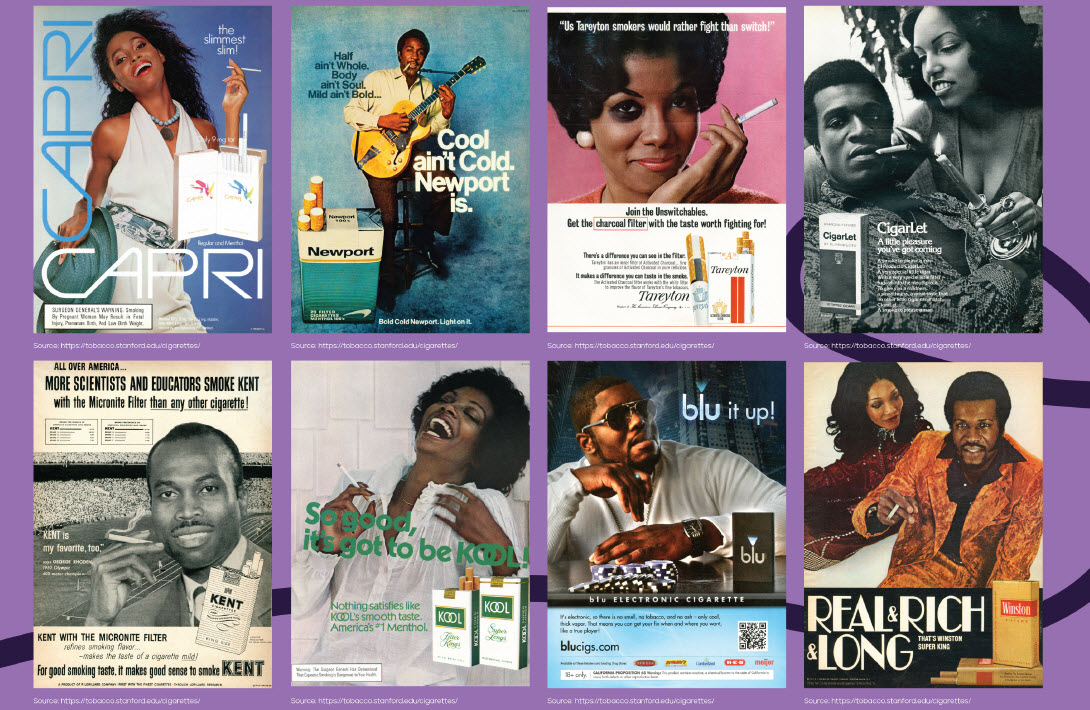
Experiential marketing
To appeal to Black audiences, tobacco companies have sponsored concerts and music festivals to promote their brands. Music themed advertising connected menthol brands with entertainment and pop culture and allowed companies to hand out free samples and promotional items.
For example, Brown & Williamson (the maker of the KOOL brand of menthol cigarettes) used jazz musicians and imagery in many of their campaigns to target Black Americans. They also took over the Newport Jazz Festival in 1972, renaming it the Kool Jazz Festival, and performed in cities with large Black populations. As hip-hop became popular, the brand also hosted DJ tours such as the 2004 “Kool Mixx” campaign featuring hip-hop artists, prizes, a themed CD, and limited-edition cigarette packs.
Tobacco industry interference
The addition of flavors in cigarettes has been banned since 2009, with one exception: menthol. Public health groups have urged the Food and Drug Administration (FDA) to remove menthol flavor from cigarettes, cigars, and cigarillos for over a decade, yet the proposed rule was formally withdrawn in 2025 due in part to pressure from the tobacco industry.
As part of its intense lobbying efforts, the tobacco industry has attempted to spread fear that menthol bans unfairly target Black Americans and would lead to further criminalization of the community, even though the FDA has made it clear that enforcement would be focused on manufacturers and retailers, not individual consumers. R.J. Reynolds, the maker of the leading menthol cigarette brand Newport, recruited prominent Black leaders including civil rights activist Rev. Al Sharpton to host town halls across the country on the subject.
Despite industry interference, polling consistently shows that most Black Americans support the removal of menthol cigarettes, with 62% showing support for ending menthol cigarette sales as of 2024.
Coupons, discounts, and promotions
Tobacco companies have systematically used coupons, discounts, and promotional pricing to make menthol cigarettes more affordable, especially in neighborhoods with a large population of Black residents.
Tobacco retailers and advertisements are also more common in areas with a greater proportion of Black or minority residents. A study found that in Washington, D.C., there are up to 10 times more tobacco advertisements in neighborhoods with a majority of Black residents compared with other neighborhoods. Little cigars and cigarillos and menthol tobacco products are also cheaper in neighborhoods with a majority of Black or young adult residents.
Reclaiming health as a form of liberation
Today, the tobacco industry’s predatory targeting continues to intersect with systemic inequities – leading to an urgent need for culturally responsive resources to equip Black individuals with the tools, education, and communal support needed to quit.
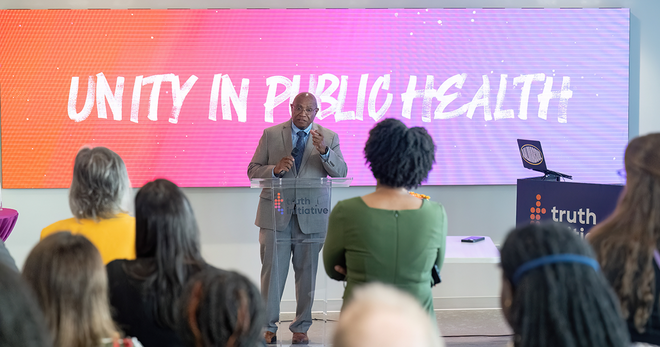
That’s why the Breath of Freedom Coalition - part of the Culture + Cessation Collective - is bringing together community leaders to reclaim the narrative around tobacco use in Black communities and empower quitting. The Breath of Freedom Coalition is committed to creating lasting partnerships that drive culturally responsive, community-led solutions for tobacco cessation, and gathers for facilitated discussions centered on cultural sensitivity, community-specific challenges, and policy-driven solutions.
More in targeted communities



Want support quitting? Join EX Program
By clicking JOIN, you agree to the Terms, Text Message Terms and Privacy Policy.
Msg&Data rates may apply; msgs are automated.